Source Manual Rising Stem Gate Valve for Water and Industrial Use
Find 30 manual rising stem gate valve options for household, industrial, and water applications. Compare stainless steel and cast iron models with flange or threaded ends to select the right flow control solution for your project; compare the available evidence and request quotations based on your requirements.
Key considerations
Products List


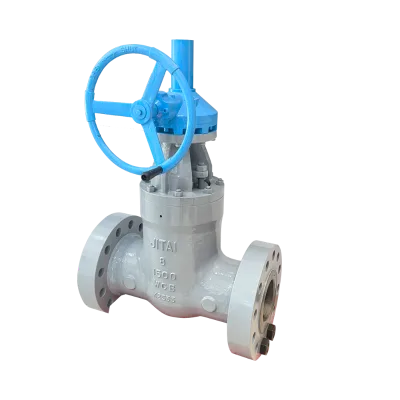


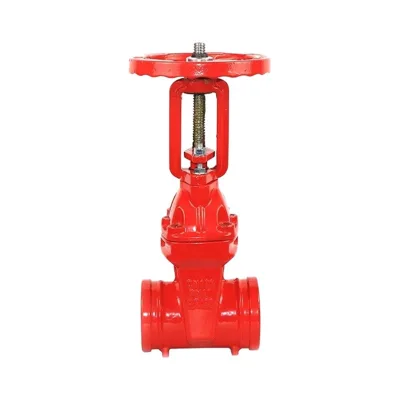
Comprehensive Sourcing Guide
Manual Rising Stem Gate Valve Sourcing Guide
Procuring manual rising stem gate valves requires a clear understanding of the specific mechanical configurations available in the current market. Buyers must distinguish between outside rising stem designs, where the stem moves visibly above the handwheel, and inside rising stem variants where the stem travels within the valve body. This distinction is critical for applications requiring visual confirmation of valve position, such as in water industrial usage or general flow control systems where stem visibility aids in operational safety and maintenance scheduling.
The observed product landscape includes valves constructed from diverse materials like stainless steel and cast iron, each suited to different environmental conditions. Stainless steel options are typically preferred for corrosive environments or where hygiene is paramount, while cast iron variants often serve general industrial applications at ordinary temperatures. Sourcing teams should verify the specific material grade and coating, such as epoxy coatings, to ensure compatibility with the intended media, whether it is water or other fluids, before finalizing any purchase order.
Product Scope and Observed Listing Signals
The market for these valves displays a wide range of sizes, extending from small 1/2-inch units up to massive 48-inch configurations for heavy-duty infrastructure. Buyers will encounter listings specifying size ranges like DN50 to DN600, which indicates the availability of both compact residential solutions and large-scale industrial components. It is essential to match the specific size requirement to the pipeline diameter, as the valve's internal geometry and flow capacity are directly tied to these dimensional specifications.
Listing signals also reveal variations in connection forms, including flange, socket weld, butt weld, and threaded ends. While flange connections are common for ease of installation and maintenance in industrial settings, other connection types may be required for specific piping systems. Procurement specialists must carefully review the end connection details in product descriptions to ensure compatibility with existing piping infrastructure, avoiding costly retrofits or custom fabrication needs later in the project lifecycle.
Technical Specifications to Verify
Technical verification must begin with the valve type and actuation method, confirming that the unit is a manual rising stem gate valve with a direct-acting or dual-through design. The wedge type, whether solid or flexible, significantly impacts sealing performance and resistance to thermal expansion. Buyers should explicitly request data on the wedge construction to ensure the valve can handle the specific pressure and temperature conditions of the application without compromising the seal integrity over time.
Pressure ratings and testing standards are equally critical for operational safety and longevity. Listings often reference pressure rates such as PN10, PN16, or PN25, alongside testing protocols like API 598 or BS EN12266-1. Procurement teams must verify that the shell and seal pressure test results meet the required safety margins, typically 1.5 times the shell pressure and 1.1 times the seal pressure, to guarantee the valve will not fail under operational stress or during hydrostatic testing.
Compliance and Safety Documentation
Compliance documentation serves as the primary evidence of a valve's adherence to international safety and quality benchmarks. Buyers should expect to see certifications such as CE and ISO, which indicate that the manufacturing process meets specific regulatory requirements for the European market and global quality management. These certifications are not merely administrative; they provide assurance that the valve has undergone rigorous design and material scrutiny before reaching the market.
In addition to general certifications, specific design and testing standards must be validated against the project requirements. Standards like API, ANSI, DIN, JIS, and GB define the dimensional and performance criteria for the valve. Procurement officers must cross-reference the listed standards, such as Face-to-Face dimensions from DIN3202 or ASME B16.1, with the engineering drawings of the installation site to ensure physical compatibility and regulatory compliance in the destination country.
Cost Drivers and Commercial Terms
Cost drivers for manual rising stem gate valves are heavily influenced by material selection, size, and the complexity of the manufacturing process. Stainless steel valves generally command a higher price point than cast iron equivalents due to material costs and the additional processing required for corrosion resistance. Buyers should analyze the price range, which can vary significantly from low-cost entry-level units to high-performance industrial valves, to align their budget with the necessary performance specifications.
Commercial terms such as Minimum Order Quantity (MOQ) and packaging requirements also impact the total cost of ownership. Observed MOQs range from single units to fifty, allowing flexibility for both small projects and large bulk purchases. Packaging standards, including sea-worthy crates or bubble bags with wooden cases, are vital for protecting the valve during transit, especially for international shipments originating from manufacturing hubs in China.
Supplier Qualification and Quality Control
Supplier qualification involves verifying the origin and manufacturing capabilities of the vendor to ensure consistent product quality. Many suppliers operate from industrial hubs like Suzhou, Jiangsu, and offer customization services to meet specific client needs. Buyers should assess the supplier's ability to provide OEM branding and their track record in delivering valves that meet the specified standards, ensuring that the supply chain is robust and reliable for future orders.
Quality control processes must be transparent and documented, particularly regarding the testing and inspection phases. Suppliers should provide evidence of testing according to standards like API 598, including detailed reports on shell and seal integrity. It is advisable to request third-party inspection reports or witness testing procedures to confirm that the valves meet the specified pressure ratings and leakage limits before they are shipped from the factory.
Long-Term Procurement Checks
Long-term procurement success depends on establishing a reliable supply chain that can support ongoing maintenance and replacement needs. Buyers should prioritize suppliers who offer customization and have a history of consistent delivery, ensuring that spare parts and replacement valves are available when needed. Building a relationship with a qualified supplier can streamline future procurement cycles and reduce the risk of supply disruptions in critical infrastructure projects.
Continuous monitoring of product performance and supplier adherence to standards is essential for maintaining system integrity. Buyers should regularly review the performance of installed valves against the original specifications, checking for any deviations in material quality or sealing performance. Establishing a feedback loop with the supplier allows for early detection of potential issues and ensures that future orders continue to meet the rigorous demands of the application environment.
FAQs
What materials are available for a manual rising stem gate valve?
The listed valves are made from stainless steel or cast iron, with stems commonly offered in SS304, SS420, or SS316. Stainless steel suits corrosive or industrial water lines, while cast iron fits general water service at ordinary pressure and temperature. Select material based on media, pressure rate such as PN10, PN16, or PN25, and installation environment.
Which standards do these gate valves comply with?
Listed products reference API, ANSI, DIN, JIS, BS, GB, and AEME standards, with design standards including GB/T12232, BS5163, and EN1171 or EN1074. Testing is performed under API 598 or BS EN12266-1. Certificates and approvals include ISO and CE, so buyers should confirm which specific standard version applies to the model they intend to order.
How is the valve tested before delivery?
Valves are pressure tested to API 598 or BS EN12266-1 requirements. Typical testing uses a shell pressure of 1.5 times the nominal pressure and a seal pressure of 1.1 times the nominal pressure. Buyers should request test reports with the shipment and confirm the applicable test standard for their chosen pressure rate, such as PN10, PN16, or PN25.
What connection types are supported for installation?
Ends are available as flange, socket weld, butt weld, or threaded connections, with flange being the standard connection form. Flange dimensions follow standards such as DIN3202-F4 or F5, BS EN558-1, and ASME B16.1. Confirm the face-to-face dimension and end type before ordering so the valve matches existing piping and bolt-hole patterns.
Can the valve be customized for specific project requirements?
Yes, customization is available. Buyers can specify size within ranges like 1/2 inch to 48 inch or DN50 to DN600, pressure rate, stem material, coating such as 250 micron epoxy, and operator type including handwheel or cap nut. Branding can be Vatac or OEM. Discuss drawings and specifications with the supplier before confirming the order.
What sizes and pressure ratings are offered?
Sizes span 1/2 inch to 48 inch on some models and DN50 to DN600 on flanged resilient designs. Pressure rates include PN10, PN16, and PN25 for ordinary and low pressure service. The valve type is rising stem, straight-through or dual-through, with a solid wedge, suitable for water media at ordinary or low temperature.
How are the valves packed and shipped?
Packing is sea worthy, with export options including bubble bags and wooden cases for individual protection. Valves may be epoxy coated with 250 microns for corrosion resistance during transport and storage. Because shipments originate from China, including Suzhou in Jiangsu, buyers should confirm packaging details, container loading, and shipping terms with the supplier when ordering.
What is the difference between inside and outside screw stems?
Rising stem valves come with the valve rod thread positioned inside or outside the gate. Outside screw designs keep the threaded stem exposed, protecting it from media contact and easing lubrication, which suits water works and industrial use. Inside screw designs are more compact and common in smaller sizes from 1/2 inch to 2 inch for household applications.